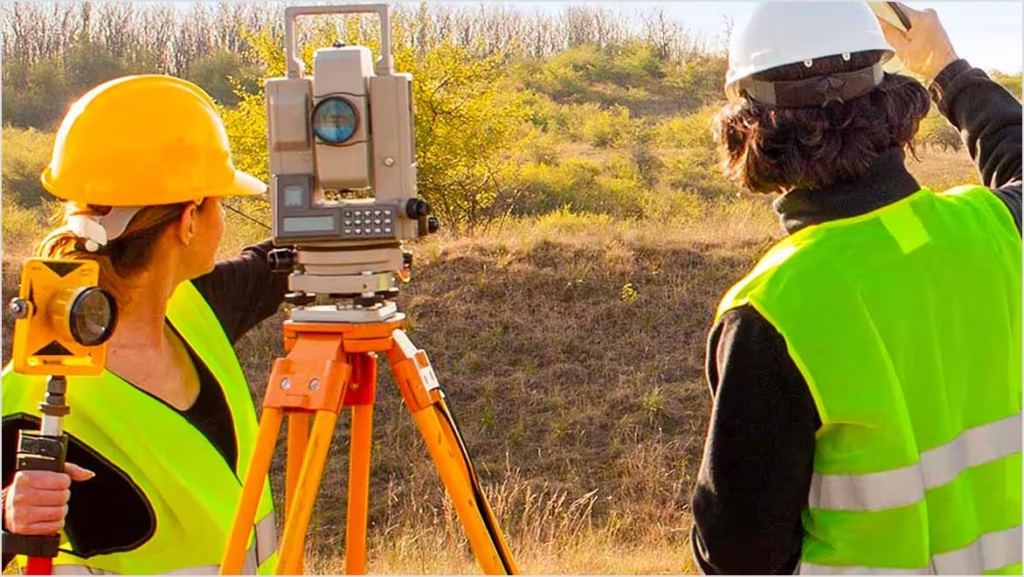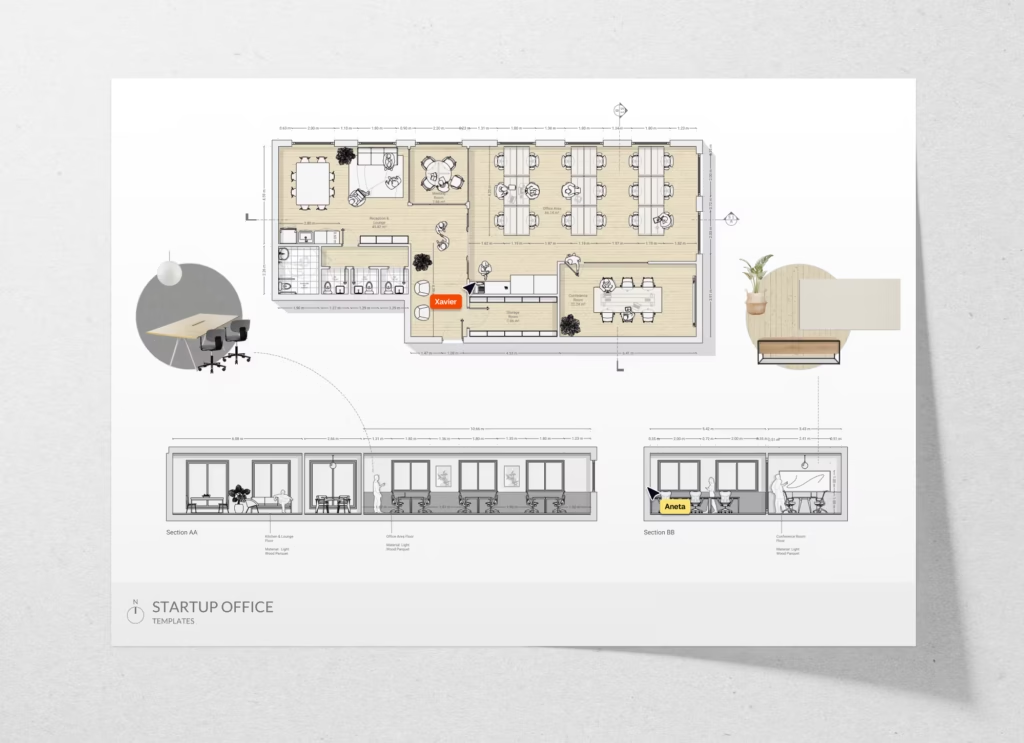
LiDAR and GIS technologies are transforming modern survey drafting by providing highly accurate, data-driven insights for land surveying and infrastructure projects. These tools enable precise mapping, efficient data processing, and improved visualization of complex terrains and site conditions.
LiDAR (Light Detection and Ranging) captures high-density point cloud data using laser scanning technology, allowing professionals to generate accurate elevation models, contours, and 3D representations. GIS (Geographic Information Systems) helps in organizing, analyzing, and managing spatial data for better planning and decision-making.
Traditional survey methods often require extensive fieldwork and manual data handling, which can be time-consuming and prone to errors. With LiDAR and GIS integration, survey drafting becomes faster, more reliable, and significantly more efficient.
By leveraging these advanced technologies, businesses can improve project accuracy, reduce turnaround time, and enhance overall productivity in survey drafting workflows.

Key Benefits of LiDAR and GIS in Survey Drafting
- High-Precision Data Collection LiDAR captures highly detailed terrain data with millions of data points, ensuring accurate mapping, elevation models, and reliable survey drafting outputs.
- Faster Data Processing and Analysis Automated workflows and GIS tools enable quick processing of large datasets, reducing turnaround time and improving overall project efficiency.
- Enhanced Visualization and Modeling 3D models, contour maps, and spatial analysis provide a clearer understanding of site conditions, helping teams make informed decisions.
- Reduced Fieldwork and Operational Costs LiDAR and drone-based surveys minimize extensive on-site data collection, saving time, reducing labor costs, and improving productivity.
- Better Planning and Decision-Making GIS integration allows advanced spatial analysis, helping engineers and planners optimize designs, reduce risks, and improve project outcomes.
LiDAR and GIS technologies have become essential tools in modern survey drafting, enabling faster, more accurate, and efficient project execution. By integrating these technologies into drafting workflows, businesses can achieve better results, reduce risks, and stay competitive in today’s data-driven industry.